 Skip to content
Are you tired of buffering and poor video quality during your favorite shows? Seamless streaming is now a necessity, and the key to achieving it lies in the right technology.

A high-quality encoder IPTV plays a crucial role in delivering crisp and uninterrupted video content to viewers worldwide. With the rise of online content consumption, having the best encoder IPTV is more important than ever.
Table of Contents
Key Takeaways
- Understanding the importance of encoder IPTVs for streaming quality.
- Benefits of using a top-rated encoder IPTV.
- Features to look for in a high-quality encoder IPTV.
- How the right encoder IPTV enhances viewer experience.
- Tips for selecting the best encoder IPTV for your needs.
What Makes encoder IPTV Essential for Quality Streaming
To achieve optimal streaming quality, understanding the function of encoder IPTVs is essential. IPTV encoders are critical in preparing video content for distribution across various platforms, ensuring that the stream is both stable and of high quality.
The Function of encoder IPTVs in Content Delivery
encoder IPTVs compress and encode video content in real-time, making it possible to stream media over the internet. This process involves converting raw video data into a format that can be efficiently transmitted to viewers. A top IPTV encoder can handle multiple streams simultaneously, providing flexibility for different broadcasting needs.

Why Quality Matters in IPTV Broadcasting
Quality is paramount in IPTV broadcasting because it directly impacts the viewer experience. High-quality streams result in higher viewer engagement and satisfaction. Factors such as resolution, bitrate, and latency are crucial in determining the quality of the stream. Using a best encoder IPTV ensures that these factors are optimized for the best possible viewing experience.
Key aspects that influence quality include:
- Resolution and scalability
- Bitrate control
- Adaptive streaming capabilities
By focusing on these elements, IPTV service providers can deliver superior quality content that meets viewer expectations.
Encoder IPTV Technology: Core Principles and Mechanisms
The backbone of IPTV streaming lies in its encoder technology, which enables seamless video transmission. encoder IPTVs are responsible for converting video content into a digital format that can be streamed over the internet.
Understanding the core principles and mechanisms behind encoder IPTV technology is crucial for appreciating its role in modern streaming services. At its core, IPTV encoder technology involves two key components: video compression and transport protocols.
Video Compression Fundamentals
Video compression is a critical aspect of IPTV encoding, as it reduces the size of video files without significantly compromising their quality. This is achieved through algorithms that eliminate redundant data and compress the remaining information. Common compression standards include H.264 and H.265, which offer a balance between quality and file size.
Effective video compression enables IPTV services to deliver high-quality video content over bandwidth-constrained networks. This is particularly important for live streaming events, where real-time transmission is essential.

Transport Protocols for IPTV Streaming
Transport protocols play a vital role in IPTV streaming, as they determine how video content is transmitted over the internet. Common transport protocols include UDP, TCP, and RTP. Each protocol has its advantages and disadvantages, with UDP being favored for real-time streaming due to its low latency.
The choice of transport protocol depends on the specific requirements of the IPTV service, including factors such as network conditions, video quality, and latency. By selecting the appropriate protocol, IPTV providers can ensure a smooth and reliable streaming experience.
Top Benefits of Investing in a Premium encoder IPTV
For content providers seeking to deliver high-quality streams, a professional encoder IPTV is an indispensable tool. Investing in a premium encoder IPTV can significantly enhance your streaming service, providing numerous benefits that directly impact your viewers’ experience and your operational efficiency.
Superior Video Quality and Viewer Experience
A premium encoder IPTV ensures superior video quality, which is crucial for retaining viewers and maintaining a competitive edge. With advanced video processing capabilities, these encoders deliver crisp, clear, and high-definition content that enhances the overall viewer experience.
Reduced Bandwidth Consumption
One of the significant advantages of a high-quality encoder IPTV is its ability to reduce bandwidth consumption without compromising on video quality. By efficiently compressing video streams, premium encoders help minimize the bandwidth required for streaming, leading to cost savings and improved network performance.
Multi-Platform Delivery Capabilities
A professional encoder IPTV also enables multi-platform delivery, allowing content providers to reach their audience across various devices and platforms. This flexibility is essential in today’s diverse viewing landscape, where consumers expect to access content on their terms.
| Benefit | Description | Impact |
|---|---|---|
| Superior Video Quality | Advanced video processing for high-definition content | Enhanced viewer experience and retention |
| Reduced Bandwidth | Efficient video compression minimizing bandwidth usage | Cost savings and improved network performance |
| Multi-Platform Delivery | Capability to deliver content across various devices and platforms | Increased audience reach and flexibility |
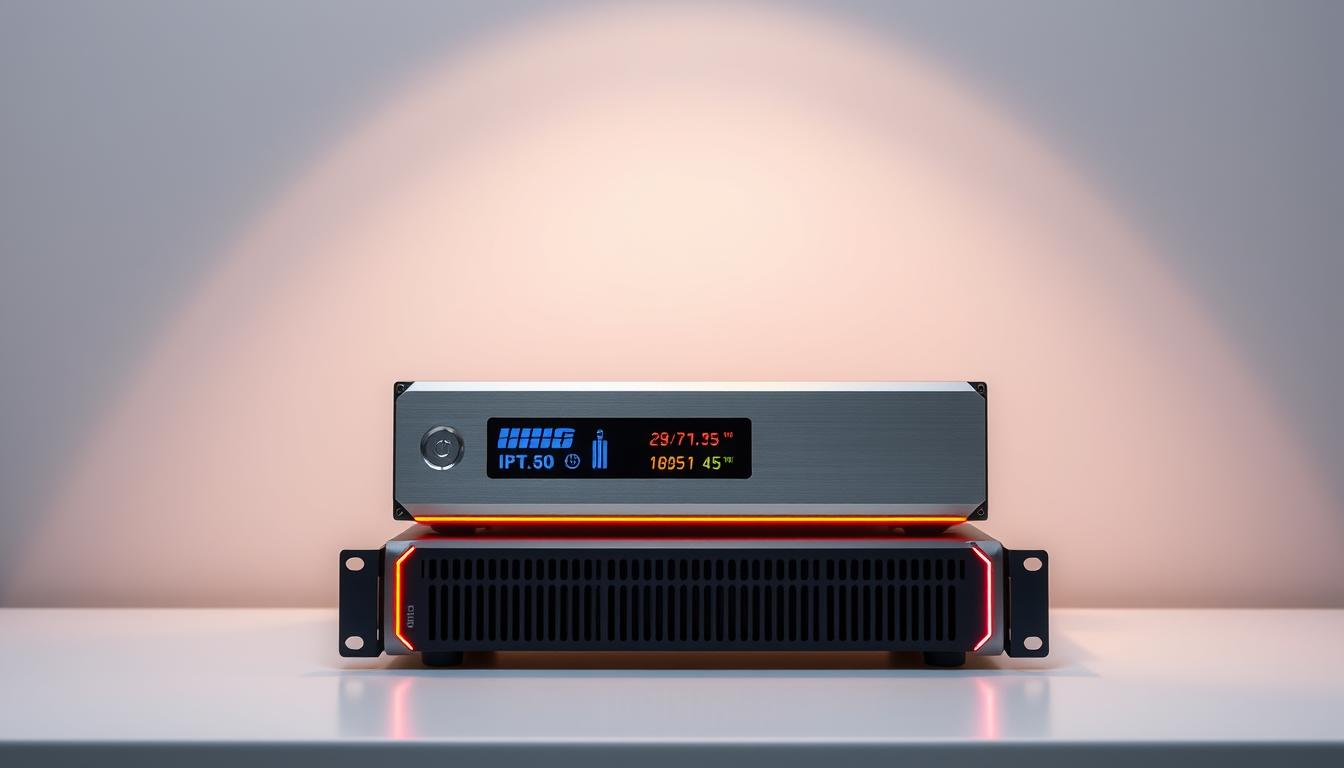
Comparing Hardware and Software IPTV Encoders
When it comes to IPTV encoding, the choice between hardware and software encoders is crucial for streaming quality. The decision hinges on factors such as budget, required video quality, and scalability needs.
Hardware Encoders: Wowza ClearCaster, Haivision Makito X
Hardware encoders are dedicated devices designed specifically for encoding video and audio streams. They offer high-quality encoding with low latency and are typically more reliable than software solutions. For instance, Wowza ClearCaster is known for its robust performance and ease of use, making it a popular choice among professionals. Similarly, Haivision Makito X provides high-quality encoding with advanced features like 4K support and SRT (Secure Reliable Transport) protocol.
Hardware encoders are advantageous in professional settings where high reliability and quality are paramount. However, they can be more expensive upfront compared to software encoders.
| Feature | Wowza ClearCaster | Haivision Makito X |
|---|---|---|
| 4K Support | Yes | Yes |
| SRT Protocol | Yes | Yes |
| Low Latency | Yes | Yes |
Software Encoders: OBS Studio, Wirecast, vMix
Software encoders, on the other hand, run on standard computer hardware and can be more cost-effective. Popular options include OBS Studio, known for its free and open-source nature, Wirecast, which offers a user-friendly interface, and vMix, providing advanced features for a reasonable price.
Software encoders offer flexibility and can be run on existing hardware, making them an affordable encoder IPTV solution for many users. However, their performance can be dependent on the computer’s specifications.
Critical Features That Define the Best encoder IPTV
The quality of an encoder IPTV is determined by several critical features that directly impact the viewing experience. These features not only enhance the streaming quality but also provide flexibility and reliability to the broadcasting system.
Resolution Support and Scalability
A top-notch encoder IPTVshould support a wide range of resolutions, from standard definition (SD) to high definition (HD) and even 4K. Scalability is also crucial, as it allows the encoder to adapt to different bandwidth conditions and device capabilities. This ensures that viewers receive the best possible quality regardless of their device or network conditions.
Bitrate Control and Adaptive Streaming
Effective bitrate control is essential for maintaining consistent video quality. An encoder IPTV with advanced bitrate control can adjust the bitrate in real-time based on network conditions, ensuring smooth playback. Adaptive streaming further enhances this by allowing the encoder to switch between different bitrates and resolutions seamlessly.
Low Latency Performance Metrics
Low latency is critical for live streaming applications, where delays can significantly impact the viewer experience. The best encoder IPTVs are designed to minimize latency while maintaining high video quality. Key performance metrics include encoding delay, buffer size, and the ability to handle high-frame-rate content.
| Feature | Description | Importance |
|---|---|---|
| Resolution Support | Ability to handle various video resolutions | High |
| Bitrate Control | Real-time adjustment of bitrate for optimal quality | High |
| Low Latency | Minimizing delay for live streaming applications | Critical |
Professional IPTV Encoding Solutions for Enterprise Streaming
Professional IPTV encoding solutions are the backbone of enterprise streaming services, providing the necessary infrastructure for high-quality video delivery. These solutions are designed to meet the demanding requirements of large-scale streaming operations.
Elemental Live and AWS MediaLive
Elemental Live is a live video processing platform that offers advanced features like real-time video processing, robust content protection, and multi-screen delivery. AWS MediaLive is a service that makes it easy to broadcast live video to the internet. It offers features like input switching, ad insertion, and content protection, making it a comprehensive solution for enterprise streaming needs.
Both Elemental Live and AWS MediaLive are designed to handle the complexities of live streaming, ensuring that viewers receive high-quality video streams. They support various formats and protocols, making them versatile choices for enterprises with diverse streaming requirements.
Harmonic VOS360 and Telestream Lightspeed
Harmonic VOS360 is a cloud-based media processing platform that enables the creation of high-quality, multi-screen video experiences. It offers advanced video encoding, content protection, and ad insertion capabilities. Telestream Lightspeed is another powerful encoding solution that provides real-time video encoding and streaming. It is known for its reliability and flexibility, supporting a wide range of video formats and streaming protocols.
Both Harmonic VOS360 and Telestream Lightspeed are geared towards enterprises that require scalable, reliable, and high-quality streaming solutions. They offer advanced features that cater to the complex needs of modern streaming services, including support for latest compression standards and robust content protection mechanisms.
By leveraging these professional IPTV encoding solutions, enterprises can ensure that their streaming services are not only of high quality but also scalable and secure, meeting the demands of a growing viewer base.
Affordable IPTV Encoders for Small-Scale Operations
IPTV streaming requires robust encoders, but small-scale operators often need solutions that won’t break the bank. Fortunately, there are several affordable encoder IPTVs on the market that deliver quality without the hefty price tag.
AJA HELO and Teradek Vidiu
The AJA HELO is a versatile and compact encoder that supports a wide range of streaming protocols, including SRT and RTMP. It’s designed for professionals who need a reliable and easy-to-use streaming solution. On the other hand, the Teradek Vidiu offers advanced features like 4K encoding and support for multiple streaming protocols, making it a powerful tool for high-quality IPTV streaming.
Both devices are praised for their durability and performance. Here’s a comparison of their key features:
| Feature | AJA HELO | Teradek Vidiu |
|---|---|---|
| Resolution Support | Up to 1080p | Up to 4K |
| Streaming Protocols | SRT, RTMP, RTSP | SRT, RTMP, UDP |
| Price Range | $500-$1000 | $1000-$2000 |
Blackmagic Web Presenter and ATEM Mini
For those on a tighter budget, the Blackmagic Web Presenter and ATEM Mini are excellent alternatives. The Blackmagic Web Presenter is designed for live streaming and supports up to 1080p resolution. The ATEM Mini, while primarily a switcher, can also be used as an encoder with the right configuration, offering a cost-effective solution for small-scale IPTV operations.
These devices highlight the diversity of options available for affordable IPTV encoding. By choosing the right encoder, small-scale operators can ensure high-quality streams that meet viewer expectations.
Security Considerations for IPTV Encoding Systems
With the increasing demand for IPTV, security considerations are more critical than ever. As the backbone of IPTV services, encoding systems must be secured to protect valuable content from unauthorized access and piracy.
Content Protection and DRM Integration
Content protection is a vital aspect of IPTV security. Digital Rights Management (DRM) integration is essential to safeguard content against piracy. A professional encoder IPTV should support multiple DRM schemes to ensure compatibility with various content providers. For instance, encoders that support Widevine, PlayReady, and FairPlay can effectively protect content across different platforms.
“DRM is not just a technology; it’s a business enabler that helps content providers monetize their assets while ensuring they are protected.” –
Industry Expert
Secure Transmission Protocols
Secure transmission protocols are crucial for protecting IPTV content during transmission. Protocols like HTTPS and SRT (Secure Reliable Transport) ensure that data is encrypted and secure. A secure encoder IPTV should support these protocols to prevent eavesdropping and tampering.
| Protocol | Security Features | Use Case |
|---|---|---|
| HTTPS | Encryption, Authentication | Secure content delivery |
| SRT | Encryption, Low Latency | Live streaming, Contribution |
Optimizing Your encoder IPTV Setup for Maximum Performance
A high-quality encoder IPTV is just the beginning; optimizing its setup is what truly matters for achieving seamless streaming experiences. To maximize your encoder’s potential, it’s essential to focus on both network configuration and quality optimization techniques.
Network Configuration Best Practices
Proper network configuration is the backbone of a successful IPTV streaming service. To ensure optimal performance, consider the following best practices:
- Implement a robust and reliable network infrastructure.
- Configure your network settings for optimal bandwidth allocation.
- Utilize Quality of Service (QoS) settings to prioritize IPTV traffic.
Quality Optimization Techniques
To further enhance your IPTV streaming quality, apply the following optimization techniques:
- Adjust your encoder settings for the best balance between quality and bandwidth usage.
- Monitor and adjust your bitrate according to your network conditions.
- Enable adaptive streaming to ensure a smooth viewing experience across different devices and network conditions.
By implementing these strategies, you can significantly improve the performance of your best IPTV encoder, ensuring a high-quality streaming experience for your viewers.
Emerging Trends Shaping the Future of IPTV Encoding
The future of IPTV encoding is being shaped by several emerging trends. As the demand for high-quality streaming continues to grow, the industry is witnessing significant advancements in encoding technologies. These developments are crucial for delivering superior video quality, reducing bandwidth consumption, and enhancing the overall viewer experience.
AV1 and VVC Compression Standards
The latest compression standards, such as AV1 and VVC (Versatile Video Coding), are playing a pivotal role in the evolution of IPTV encoding. AV1, developed by the Alliance for Open Media, offers improved compression efficiency, reducing the bitrate required for high-quality video streaming. VVC, on the other hand, promises even greater compression gains, making it possible to deliver 4K and 8K content more efficiently.
- Improved compression efficiency
- Enhanced video quality
- Reduced bandwidth requirements
Cloud-Based and AI-Enhanced Encoding
Cloud-based encoding solutions are gaining traction due to their scalability and flexibility. These solutions enable broadcasters to encode and stream content from the cloud, reducing the need for expensive hardware. Additionally, AI-enhanced encoding is being explored to optimize encoding parameters in real-time, further improving the quality and efficiency of IPTV streaming.
Conclusion: Selecting the Ideal IPTV Encoder for Your Streaming Needs
Choosing the right encoder IPTV is crucial for delivering high-quality streaming services. As discussed, IPTV encoders play a vital role in content delivery, and selecting a professional IPTV encoder can significantly enhance the viewer experience.
When selecting an IPTV encoder, consider factors such as video quality, bandwidth consumption, and multi-platform delivery capabilities. Hardware encoders like Wowza ClearCaster and Haivision Makito X offer robust performance, while software encoders like OBS Studio and Wirecast provide flexibility.
For enterprise streaming, professional IPTV encoders like Elemental Live and Harmonic VOS360 are ideal, offering advanced features such as content protection and DRM integration. For smaller operations, affordable options like AJA HELO and Teradek Vidiu can provide reliable performance.
Ultimately, the ideal IPTV encoder depends on specific streaming needs and applications. By considering the key features and benefits outlined in this article, you can make an informed decision and choose a professional IPTV encoder that meets your requirements.
FAQ
What is an IPTV encoder, and how does it work?
An IPTV encoder is a device or software that converts video and audio signals into a digital format for streaming over the internet. It works by compressing the video and audio data, encrypting it for security, and transmitting it over IP networks to viewers.
What are the key features to look for in a high-quality IPTV encoder?
When selecting an IPTV encoder, look for features such as high-resolution support, scalability, bitrate control, adaptive streaming, and low latency performance. Additionally, consider the type of encoding technology used, such as H.264 or H.265, and the level of content protection and DRM integration.
What is the difference between hardware and software IPTV encoders?
Hardware IPTV encoders are dedicated devices designed specifically for encoding video and audio signals, such as Wowza ClearCaster and Haivision Makito X. Software IPTV encoders, on the other hand, are programs that run on standard computer hardware, such as OBS Studio, Wirecast, and vMix. Hardware encoders offer reliability and ease of use, while software encoders provide flexibility and customization options.
How do I choose the best IPTV encoder for my streaming needs?
To choose the best IPTV encoder, consider factors such as the type of content you are streaming, the number of viewers, and your budget. You should also consider the level of video quality, bandwidth consumption, and multi-platform delivery capabilities. Research different IPTV encoders, such as Elemental Live, AWS MediaLive, and Harmonic VOS360, and compare their features and pricing.
What are some emerging trends in IPTV encoding technology?
Some emerging trends in IPTV encoding technology include the adoption of new compression standards like AV1 and VVC, the growth of cloud-based and AI-enhanced encoding, and the increasing importance of low latency performance and content protection. These trends are shaping the future of IPTV encoding and will continue to impact the industry in the coming years.
How can I optimize my IPTV encoder setup for maximum performance?
To optimize your IPTV encoder setup, follow network configuration best practices, such as configuring your network for optimal throughput and latency. You should also use quality optimization techniques, such as adjusting bitrate and resolution settings, to achieve the best possible video quality. Additionally, consider using adaptive streaming and low latency performance features to enhance the viewer experience.
What are some affordable IPTV encoder options for small-scale operations?
Some affordable IPTV encoder options for small-scale operations include AJA HELO, Teradek Vidiu, Blackmagic Web Presenter, and ATEM Mini. These encoders offer a range of features and pricing options, making them suitable for small businesses and individuals looking to stream high-quality video content.
